Rooted in tradition, applied practically
Time-tested principles for modern living
Vastu Shastra
Understand how direction, daylight, movement and room purpose shape the way your home or workplace feels and functions.
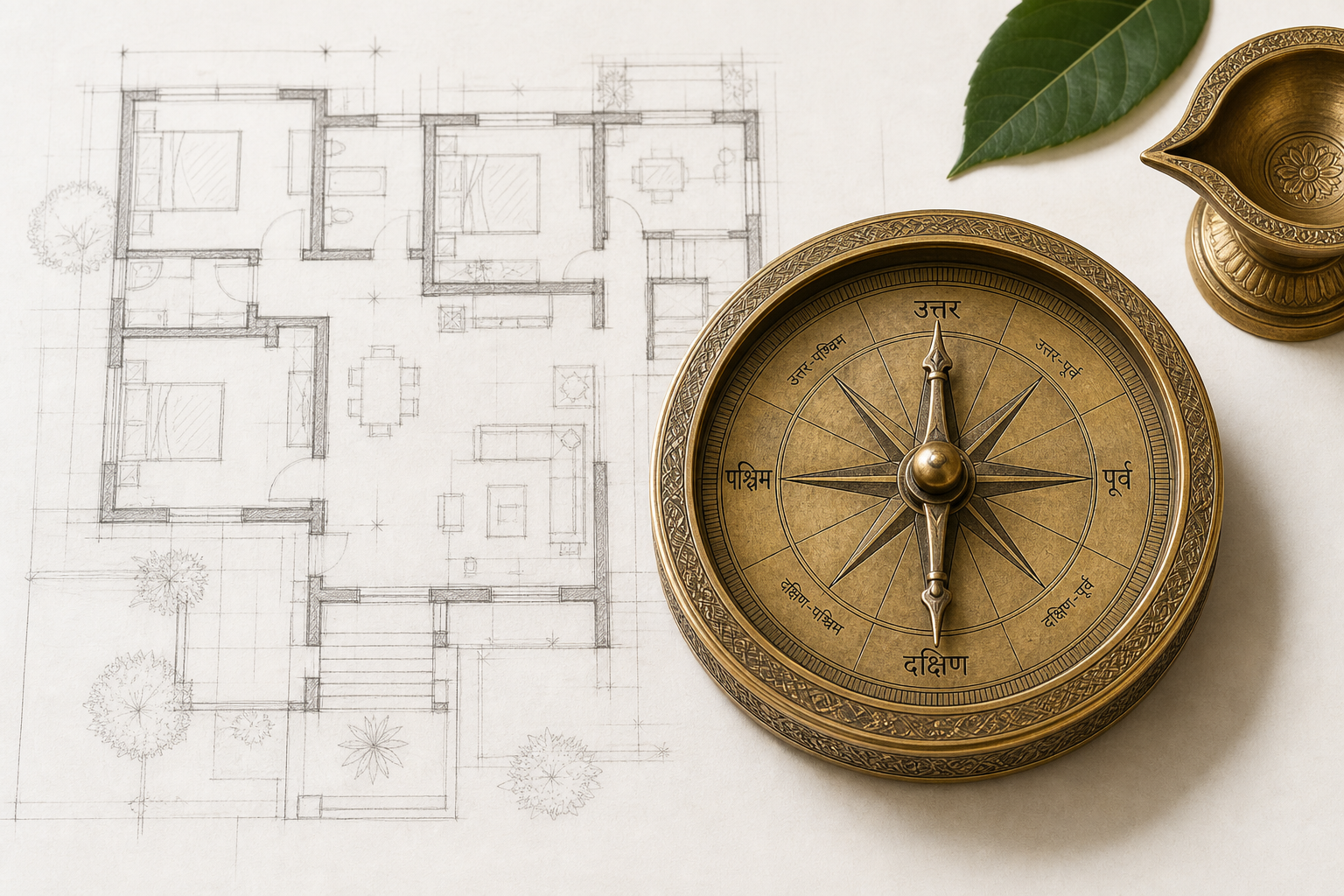
Time-tested principles for modern living
Clear steps you can understand and apply
Designed for real spaces and real life
The essentials
A responsible review considers the whole plan and the people using it. No single direction, object, or room decides the quality of a home.
Study how the site is approached, how the door opens, and how movement begins. Direction matters in context, not as a stand-alone verdict.
Natural light, shade, airflow, climate, and privacy affect comfort directly and should be assessed before decorative remedies.
Place daily activities where access, noise, safety, and privacy support their actual use. A room label alone does not determine suitability.
Clear routes help a space work calmly. Remove obstruction and resolve storage pressure before adding ritual or symbolic objects.
Review room scale, furniture weight, openings, and visual balance together. Practical harmony is more useful than rigid symmetry.
Vastu observation
Walk through the space at different times of day. Note what supports ease and what repeatedly interrupts it.
A useful consultation studies the floor plan, compass orientation, surrounding site, occupants, and practical constraints. Recommendations should explain their reasoning and avoid fear-driven demolition or expensive purchases.