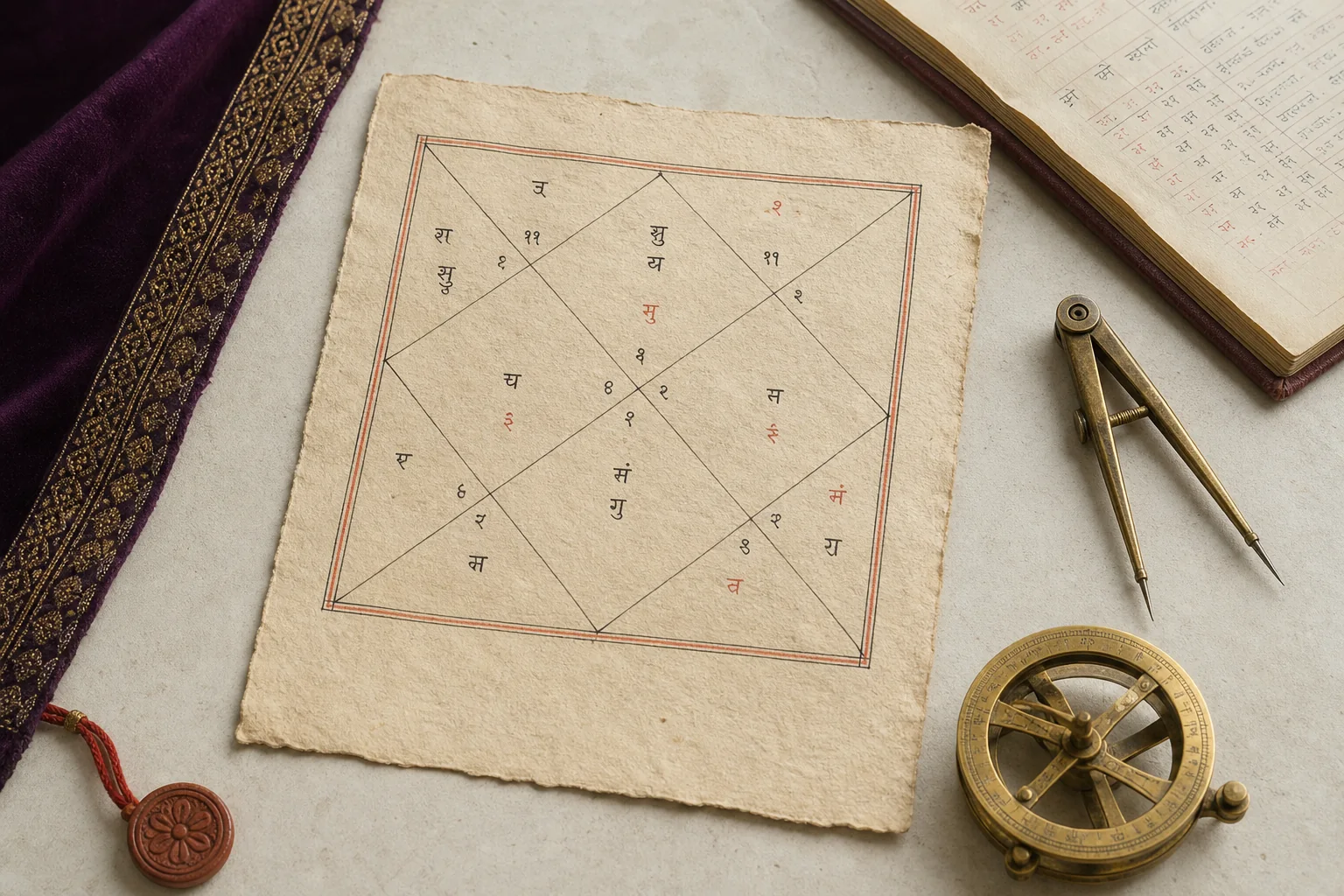
A map of a particular sky
A Vedic birth chart records the zodiacal positions of the planets for a specific date, time, and place. The ascendant establishes the house structure, while planets, signs, nakshatras, aspects, and house rulerships describe different parts of the chart. Interpretation comes from reading these factors together rather than treating one placement as a complete verdict.
Patterns, not guarantees
A chart can describe recurring tendencies, areas of ease and effort, and periods when certain themes may become more active. It cannot prove that one event must happen, identify a person's moral worth, or replace medical, legal, financial, or psychological expertise. Similar placements can be lived differently because circumstances, choices, and maturity matter.
Timing needs more than one technique
Classical timing usually combines dasha periods with relevant transits and the natal promise of the chart. A transit alone is not enough. When several independent factors repeat the same theme, an astrologer may discuss a stronger period of emphasis, while still presenting possibilities rather than certainty.
Accuracy begins with accurate inputs
Birth time determines the ascendant and house cusps and can change divisional charts and timing judgements. If the time is approximate, a responsible reading should say so and limit conclusions that depend on exact house placement.
This guide is for general education. Consider your own circumstances and qualified professional advice when making important decisions.
Create your birth chart