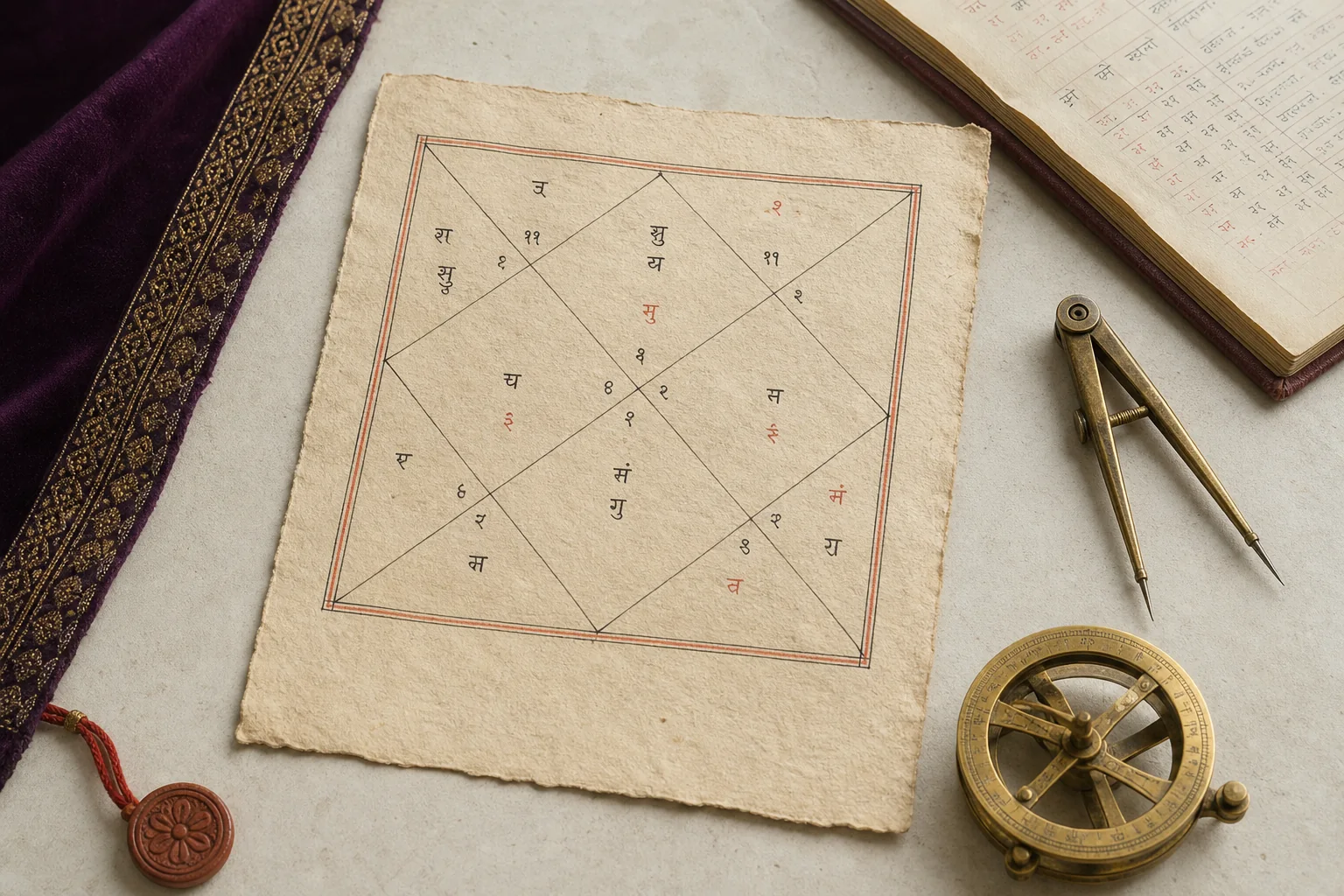
Five limbs, one daily context
Panchang means five limbs: vara (weekday), tithi (lunar day), nakshatra (the Moon's lunar mansion), yoga, and karana. Each describes a different astronomical relationship. They are read together for the location and local sunrise rather than as five unrelated labels.
Tithi and nakshatra
Tithi measures the angular distance between the Sun and Moon in twelve-degree steps. Nakshatra follows the Moon through twenty-seven divisions of the zodiac. Traditional practice associates each with different qualities, but suitability also depends on the intended activity and other Panchang factors.
Local time matters
Sunrise, sunset, and calculation location affect daily boundaries and time windows such as Rahu Kaal and choghadiya. A Panchang calculated for another city may not give correct local timings, especially across time zones or at distant latitudes.
Panchang is not a personal chart
The daily Panchang describes collective timing for a place. Personal muhurta requires additional checks, including the individual's birth chart and the nature of the planned activity. A generally supportive period is not automatically ideal for every person or purpose.
Sources and further reading
Astronomy sources explain physical motion; astrology sources describe traditions, not proof of predictions.
This guide is for general education. Consider your own circumstances and qualified professional advice when making important decisions.
Open today's Panchang